

 |
 |
 |
| VÁC JEWISH CEMETERY II ADDRESS: 2600 Vác, Ambró Ferenc utca 24 / 2, Pest County, Central Hungary, Hungary LO TISHKACH ID NO.: 1071 |
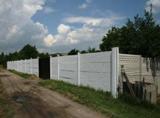
Location & Demarcation: The flat urban area, separate but near other cemeteries, has no sign or marker. The cemetery is reached by turning directly off a public road. Access is open to all via a continuous masonry wall and gate with a lock. The boundaries are unchanged since 1939. Pre- and post-WWII size of cemetery is 0.82 hectares
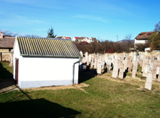
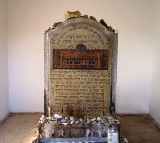
Graves, Gravestones, Memorial Markers & Structures: Over 100 gravestones can be found at the site, of which over 25% are toppled or broken. The gravestones date from 1877 up until the 20th century. The gravestones are made of marble, granite and limestone. Some gravestones feature carved relief decoration, and yet some others have traces of painting on their surfaces. Inscriptions are in Hebrew, German and Hungarian.
Special sections exist for men, women, rabbis, Cohanim and suicides. The cemetery contains no known mass graves but has a pre-burial house. Adjacent properties are residential and cemetery.
Rabbi Jeshaye Silberstein is buried at this cemetery. The last known Hasidic Orthodox Jewish burial was in 1991. The Jewish settlements of God and Szod (15km away) also used this site.
Present Cemetery Care: Present Cemetery Care: Jewish individuals within Hungary and from abroad financed a full restoration project in 1989-91. No vandalism to the site was reported since the restoration. There is a regular caretaker at the site. The works, which were directed by New York based Heritage Foundation for Preservation of Jewish Cemeteries (Avoseinu/HFPJC), included restoration of the boundary fence and entrance gate, re-erection of topped stones, and clearing of vegetation.
Pollution, vandalism, and vegetation continue to be moderate threats. Vegetation overgrowth is a seasonal problem that prevents access.
History of the Jewish Community: Even during the period of Turkish rule, in the sixteenth century, there was Jewish settlement. Between 1570 and 1580, the Turkish census mentions a “Jewish street” with six houses. After the expulsion of the Turks in 1684 the town was destroyed, and the Jews left Vác together with the Turkish Army. Until the nineteenth century, there were no Jews in Vác, and no trace of them in official reports.
A Jewish community was organized in Vác only after the publication of the law on free residence in 1841. The initial Jewish re-settlers were merchants who directed businesses in Vác, but they were forced to return every evening to the nearby village of Penc, where they were permitted to live.
The Vác Chevra Kadisha was founded in 1844, and a permanent synagogue, built in Romantic style was inaugurated in 1864. The Vác synagogue is on Eötvös K. utca, 5.
The Vác Jewish community was first organized in 1841. After the split of Jewish communities in Hungary in 1869, the Vác community also split. The majority defined itself as Orthodox. In 1875 however, the two parts united and declared itself ‘Status Quo’. Only a few of the most radical separated and established for themselves an Orthodox community. Ultimately, in 1930 the united community also defined itself as Orthodox. The community owned a library, and an organized archive. The communities welfare institutions included a Women’s Organization (opened in 1868), and Malbish Arumim for clothing the poor.
There were five Jews in Vác in 1840; 139 in 1869; 2,131 in 1910; 2,059 in 1920; 1,854 in 1941; and 377 in 1946. Presently less than 10 Jews reside in Vác. The rapid growth of the number of Jews stopped in the First World War, and there was even a decrease of their numbers afterwards.
After the German invasion of Vác on March 19, 1944, the Jews of Vác were deported to Auschwitz, and only a few survived.
A temporary ghetto was established in March 1944, after the entrance of the Germans into Hungary. All the Jews of Vác were transferred to the brick factory in the nearby town of Mono. Their transfer was done quickly, and they were permitted to take only a little food. Jewelry and valuables were confiscated from them. In the Mono ghetto there were also Jews from nearby settlements: Alag, Alsógöd, Dunakeszi and Veresegyház. Arrested Jews lived for four weeks outdoors, fed by their small supplies of food they had brought with them. Finally, they were taken to Auschwitz. Very few returned after the war, and they organized a new little Orthodox community, but little by little, their numbers dwindled. Some emigrated to other countries, others moved to Budapest, and the community ceased to exist. Very few Jews now remain in Vác. Many of the former Vác Jews returned to their community and prayed there during the High Holidays.
Alternative Town Names: Waitzen (Ger.) | Vácium (Latin) | Vácov (Slovakian) | ווייצן (Yiddish)
Source: E. Bindiger. Images © Lo Tishkach Foundation
