

 |
 |
 |
| TALLINN RAHUMÄE JEWISH CEMETERY ADDRESS: 6, Rahumäe 11316 Tallinn, Estonia LO TISHKACH ID NO.: 32 |
Alternative/Former City Names: Reval, Tallinna, Та́ллин
Cemetery Established: 1909
Jewish Community Established: 1830
Present Usage of Cemetery: This separate section of the Rahumäe municipal cemetery is an active Jewish cemetery.
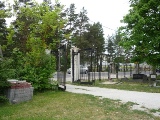
Location & Demarcation: Located off a public road, this fenced Jewish burial ground is part of the Rahumäe municipal cemetery. It is equipped with a lockable gate. In several places, the fence is missing or needs repair. A shed and a 1910 wooden building for religious purposes are located at the site. While the land of the cemetery belongs to the Tallinn municipality, the buildings have been the property of the Jewish Religious Community since 2004. Basic maintenance is provided by the municipality, which is also preparing adjacent land for extension of the existing cemetery.
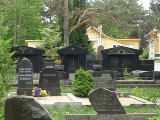
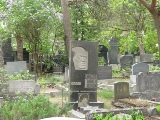
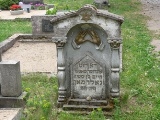
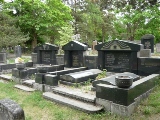
Gravestones, Memorial Markers & Structures: Several hundred gravestones are located in the 0.94 ha cemetery, the vast majority of them intact. Having been in active use since its establishment, the cemetery illustrates the historical development of gravestone design and burial customs over the course of a century. There are also two memorial markers located at the site – one for Jews who perished in the Holocaust and one for Jews killed or deported during Stalinist repression.
History of the Jewish Community: In the late 1820s, Kantonists – young Jewish men enrolled in the Tsarist Russian Army – began arriving in Tallinn, which was located outside the Pale of Settlement to which most Jews in Tsarist Russia were confined. In 1856, the Jewish community was officially established, and with it the Magasini Jewish cemetery, where no gravestones remain today. Following Estonia’s independence in 1918, Jews were given the right to cultural autonomy, which was revoked as a result of the Soviet invasion in 1940. Shortly after their arrival in 1941, German occupants killed all 1000 Jews that had remained in the country. Estonia’s renewed independence in 1991 has been beneficial to the development of Jewish communal life, which was widely restricted under Soviet rule between 1944 and the late 1980s.
|
 |
 |
Source: Cemetery survey carried out by Lo Tishkach Research Co-ordinator Andreas Becker in June 2009. Images © Lo Tishkach Foundation.
